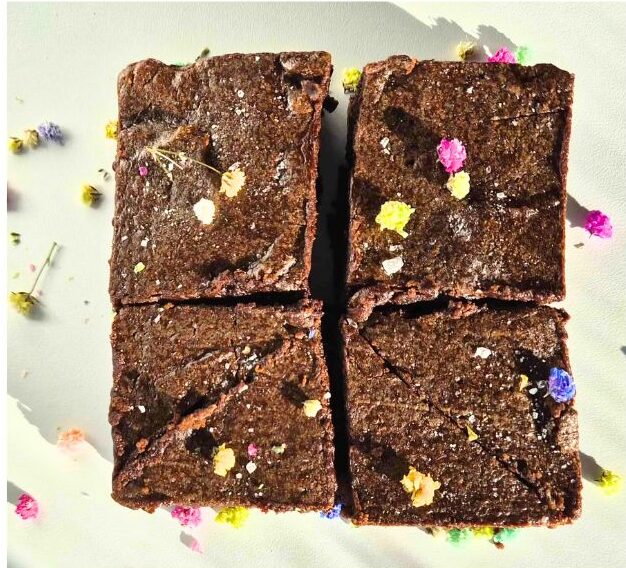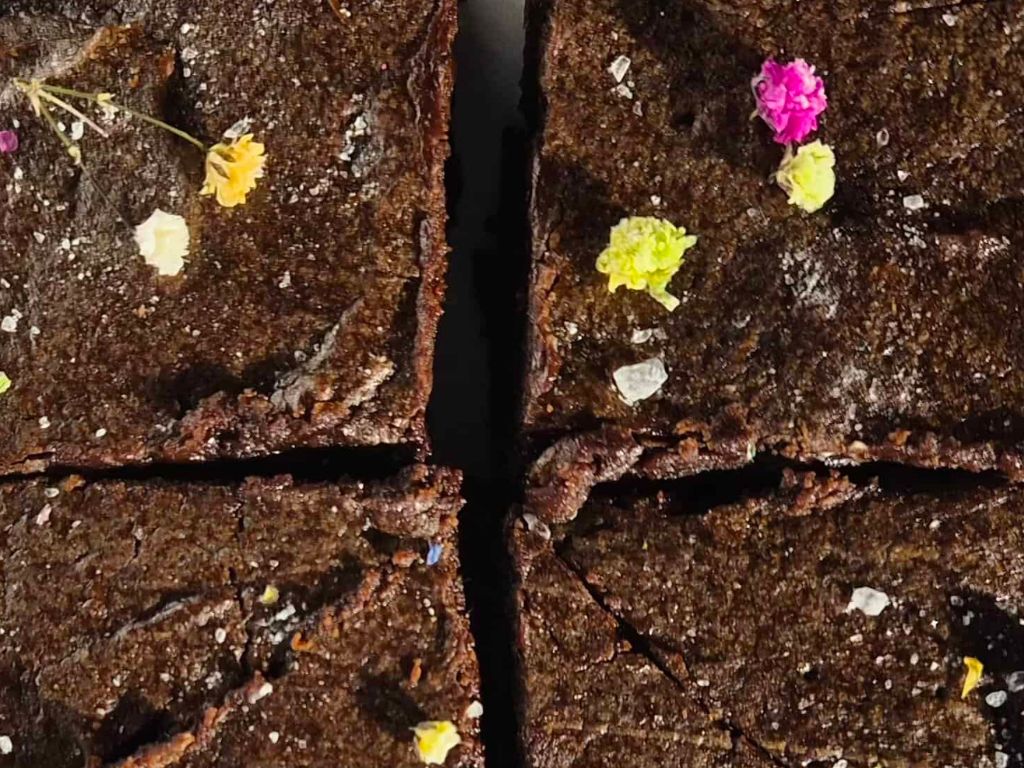
The perfect brownie has edges that chew like soft caramel candy — while the center stays thick and fudgy. The brownie center should yield just enough under your fork before melting into fudgy richness, and its top should crinkle in its display of a beautiful, glossy, paper-thin crust. Chocolate brownies have slightly sticky edges, and cutting into them squeezes out the ooey-gooey chocolaty filling. It’s dense without being gummy, moist without being underdone, and — most importantly — has enough chocolate intensity that you want to come back for another square seconds after the first. Served warm with vanilla ice cream or a glass of milk, a perfectly baked homemade brownie is a decadent treat and a chocolate lover’s delight.
Why read this post?
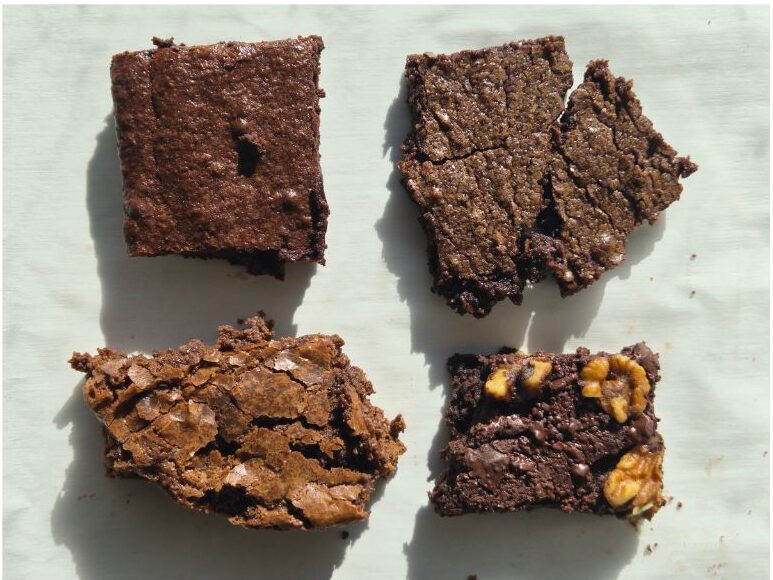
Brownie lovers fall strictly into three camps – those that prefer cakey brownies, fudgy brownies or chewy brownies. While testing these brownies side by side, I learned that my family leans towards a slightly fudgy, semi-sweet brownie with a deep chew. Written for the home baker, this post is for anyone who wants to elevate a boxed mix, bake brownies from scratch for the first time. If you are chasing a particular flavour combination or texture in mind, or have the need to find a good substitution, read on below.
A basic brownie formula goes like this – its a combination of Fat + Sugar + Cocoa + Flour
FATS
Choosing the right sources of fat for your brownie creates that fudgy, chewy texture without compromising flavour or structure.A brownie recipe that calls for a combination of both butter and a solid oil like coconut oil will bake a moist, chewy brownie with a softer yield than just butter alone. Adding extra fat from egg yolks alone serves as a good substitution if you don’t have coconut oil on hand
SUGARS
Sugar is important for brownies for more than just its level of sweetness. It provides moisture in the brownie, balances the bitterness from the cocoa and helps provide the softness in a brownie. Brown Sugar or white granulated sugar are both good options. If you can, opt for a combination of both. I prefer brown sugar because the molasses in the brown sugar helps add the to extra chewnyness that I prefer in my brownie.
CHOCOLATE
I like to use a good chocolate brand. Afterall, the brownie is only as good as the chocolate you use. The options are plenty, Ghiredelli is a household favorite – bold in flavor and economical enough to have on hand. The real question is do you need a bar of chocolate or will cocoa powder suffice? The answer to this one is explored in depth as you read below.
FLOUR
Flour is typically used to bind the other ingredients together along with a couple of whole eggs. You dont need a ton either. It’s that starch that provides the network of gluten needed to hold all the fat and chocolate together. I used Great Value flour for these brownies.
LEAVENERS
SALTS + SPICES
Ingredients Used
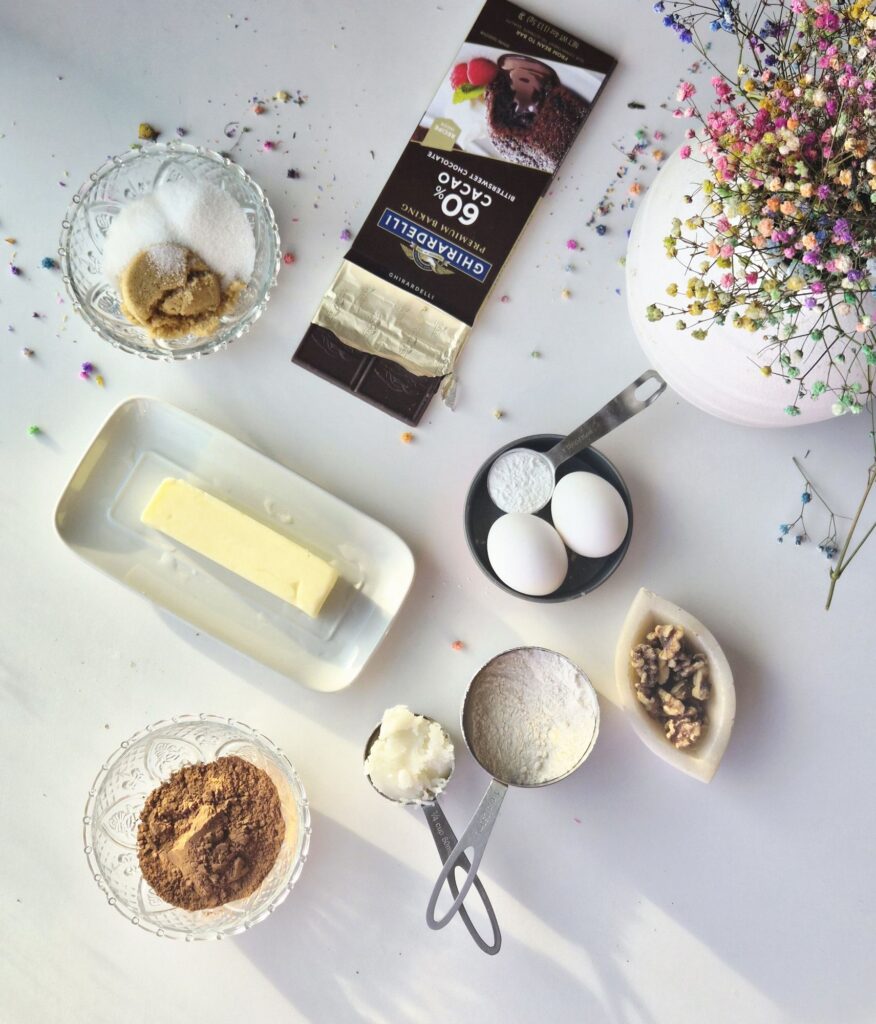
- Brown Sugar
- Granulated Sugar
- 60% Cacao Bittersweet Chocolate (Ghirradelli)
- Semi Sweet Chocolate Baking Chips (Nestle Toll House)
- 100% Dutch Processed Cocoa Powder
- Great Value All Purpose Flour
- Whole Eggs & Egg Yolks
- Salted Butter
- Coconut Oil
- Olive Oil
- Baking Powder
- Kosher Salt
- Walnuts
The Baking Theories
#1 Chocolate Vs Cocoa Powder for making Brownies
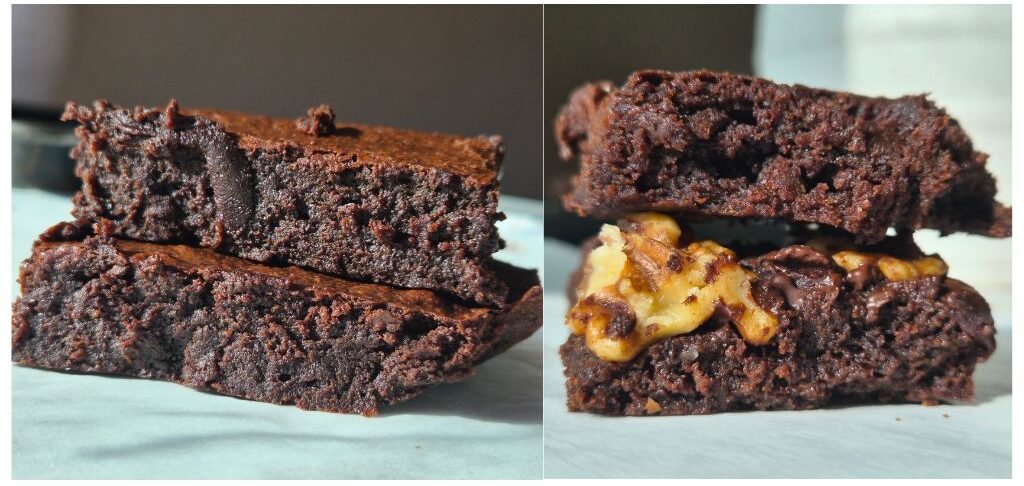
The first baking theory I tested was: “What makes better brownies, or specifically, the fudgiest brownies? Melting squares of baking chocolate or cocoa powder?” My initial hypothesis was that melting squares of chocolate or chocolate chips would yield the fudgiest brownies. More chocolate = more fudge, right? I was initially surprised to find out that many brownie recipes actually call for a mixture of both – melting the chocolate with butter and sugar and adding cocoa powder as a dry ingredient. The brownie you see on the left has no melting chocolate in it, just 100% dutch processed cocoa powder. The brownie on the right has cocoa powder, melting chcocolate bar and chocolate chips in it. While they were both fudgy, the one on the right was so fudgy that I am hesitant to even call it a brownie. It tasted more like a dark chocolate fudge. The crust with the melted chocolate brownie was glossy but it did not have the wafer thin cricnkly crust that is the signature look of a classic brownie.
The Verdict
It turns out that adding all that extra chocolate might just be overkill.
#2 Oil Vs Butter: Which is the better fat for brownies?
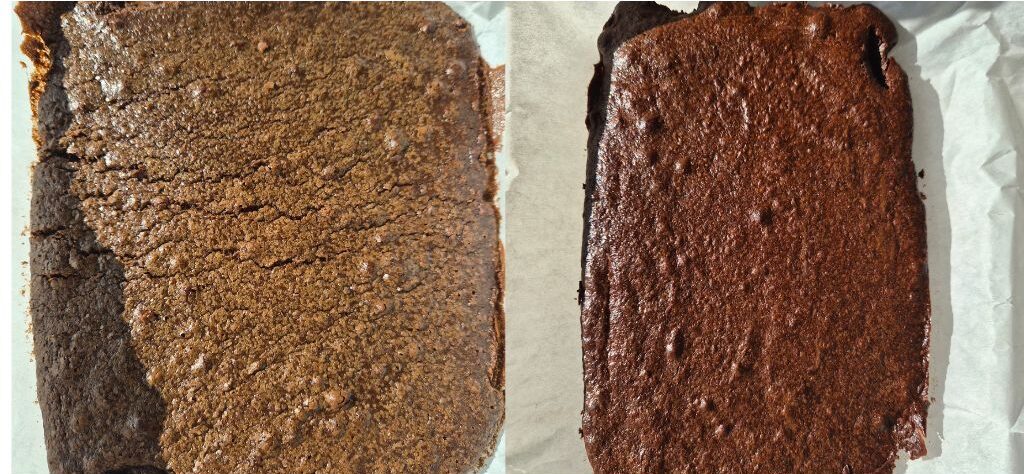
I made two brownies with the same ingredients and very similar ratios, except I swapped olive oil for butter in one of them. This one swap completely changed the texture and overall appearance of the brownie. As you can see in the pictures below, the one to the left, made with olive oil spread more, was much softer to the point that it fell apart on its way into our mouth, and has a crackly top without the signature gloss. The brownie on the right is made with all butter. It cut clean squares and held its shape. The crust has a more pronounced gloss to it. The brownie made with oil butter also looks richer in color. The flavour profile of the olive oil brownie has a slightly fruity note to it. The taste was actually a big plus for the olive oil, but since it was super fudgy to the point that it fell apart was not appealing to me. The soft texture made it significantly harder for me to cut into squares and made it less portable for taking it to events like potlucks.
The Verdict
I would choose an all-butter brownie recipe or a combination of butter and a solid oil such as coconut oil in lieu of olive oil or vegetable oil. Solid fats like butter or coconut oil help with the overall appearance of the brownie, making it easier to hold its shape and don’t add anything unpleasant to the rich chocolaty flavour that one expects from a brownie.
# 3 The Role of Baking Powder in Brownies
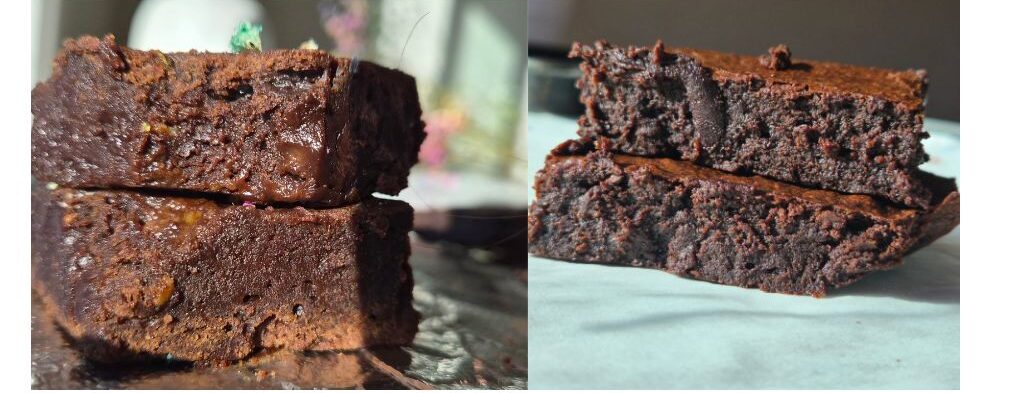
Baking powder creates tiny air pockets in the batter, resulting in a lighter brownie. Opting to omit the baking powder results in a dense brownie. The baking powder also creates a slight lift in the brownies as shown in the picture on the left. The brownie on the right is slightly flatter. Both remain very fudgy.
How I came up with this Recipe
This brownie is rich with cocoa and has deep notes of caramel, a soft and fudgy center with pops of salt from the sea salt sprinkled on top after baking.